Showing posts with label creativity. Show all posts

Saturday, June 23, 2018

leadership dot #2199: gone to the dogs

People in the United States are crazy about their dogs – all 90 million of them-- so it is no surprise that companies and organizations try to capitalize on that to earn their piece of the multi-billion-dollar pet industry.

One of the most clever events in this category is the Bark at the Park promotion at Safeco Field in Seattle. On four special nights this season, you can purchase a $50 Dog Pack which includes “a human ticket, dog ticket, Mariners dog giveaway and postgame walk around the bases”. Giveaways include a Mariners dog food bowl, tennis ball launcher and water bowl. If I lived in Seattle, I would be there!

Except for the giveaways (which undoubtedly have a sponsor) and the "waste disposable management team", this event costs them nothing, yet I would guess that it will go a long way to boost attendance on otherwise uneventful weekday nights.

What can your organization do to earn the goodwill and greenbacks of the many dog lovers that you serve? It doesn’t have to be every day but creating a special occasion that includes the pups will have you wagging all the way to the bank.

Thanks, Meg!

Monday, May 28, 2018

leadership dot #2173: corny

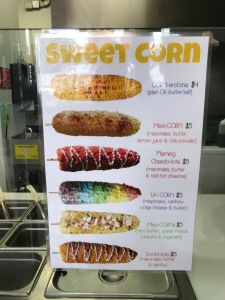
Memorial Day is often the first cookout weekend, and for many, that means sweet corn along with the grilling. Most corn is served boiled or grilled but a restaurant in California puts those traditional methods to shame.

Why stop at butter when you can have an ear rolled in Flaming Hot Cheetos or lemon juice and chili powder? My favorite was the Uni-Corn featuring rainbow-colored cotija cheese. From Mexican to Doritos to Cheetos to queso fresca, this sweet corn was definitely not served straight from the farm.

All around you, there are items that have been cooked or done in a traditional way for years. Think about the crazy flavors of corn when you are serving up your picnic or even when you are heading into the office tomorrow. Pledge to step out of the box to take something ordinary and make it extraordinary.

Saturday, May 26, 2018

leadership dot #2171: celestial

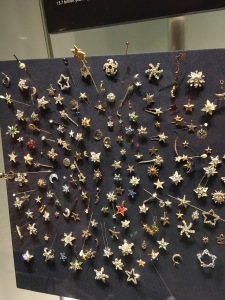
Another stop on my California visit was the Griffith Observatory, an imposing architectural structure that towers above Los Angeles. The Observatory contains exhibits that you would expect – a planetarium, telescopes, moon rocks, and solar system exhibits – but the most eye-catching display was that of jewelry.

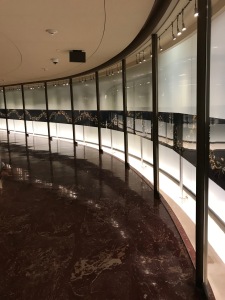
Kudos to the curator who expanded his/her view of what could or should be featured in an observatory. Because of their openness and vision, one very long hallway is enhanced with 2200 pieces of jewelry representing variations of celestial objects and astronomy. The collection was amassed over 25 years and donated by a long-time board member – who obviously had an affinity for the stars. It provided a beautiful diversion from the geodes and rugged items on display and illustrated the expansiveness of both the universe and interpretation of it.

The next time you need to communicate a message or emotion, think beyond the usual ways of doing so. The sky’s the limit for ways you can effectively tell your story!

Saturday, May 12, 2018

leadership dot #2157: art

Public art has become a popular component of urban renewal and in cities who wish to increase their creative vibrancy. Our town recently commissioned art for the sides of about a dozen buildings downtown and infused tired brick with murals that are several stories high. It transformed the landscape with color and thought-provoking images and made many people a fan of big art that adorns public spaces.

I am also a fan of little art that enhances personal spaces. I think that color and artistic expression in small ways can add a flourish to an otherwise plain platform and bring some positive energy into our lives. There are many ways to infuse your world with art beyond the obvious photos or paintings on your wall. Think about the personal expression you can add to your checks, wardrobe, outgoing mail, table settings or gift giving.

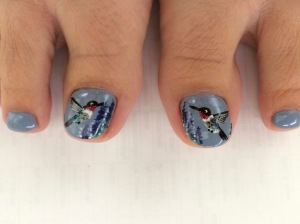
As sandal-wearing weather approaches in much of the country, another way to add original art to your life is to find yourself a pedicure artist. The right talent can create mini-masterpieces out of nail polish to make art a part of your daily presence.

Art doesn’t have to be expensive, lofty or formal. Whether it be on a multi-story canvas or a big toe, find ways to incorporate color and original expression in your day.

Monday, May 7, 2018

leadership dot #2152: decouple

So many new products and services come about because of an additional feature or enhanced component but think about the success stories that are because of what they subtracted.

Acute care centers created a whole new level of medical treatment when they did without the extensive services that an emergency room can provide. Southwest captured the vacation traveler niche when it did without in-flight amenities and complex booking procedures. A whole category of budget hotels became popular by foregoing room service, restaurants and concierges. Planet Fitness focused on the average person who wanted to stay in shape and left the serious bodybuilders to go elsewhere.

Dry shampoo is a whole new market that left the water behind. Pepper focused on whole peppercorns and fresh grinders without worrying about the salt component to the spice set. Salt created its own niche with a push for sea salt as a premium product. Our local movie theatre made a name for itself for its popcorn as much as for its movies.

Opportunities abound when you decouple items that are traditionally paired and focus on creating a uniqueness with one component. The next time you’re looking to provide something new ask yourself what you should leave out to achieve it.

Sunday, May 6, 2018

leadership dot #2151: coloring book

Treat bags are standard fare at birthday parties for young children, but what do you give as a favor when the party is for an octogenarian? And what do you give the birthday girl herself?

One family solved both problems by custom-designing a coloring book featuring friends, family and memories of the guest of honor. She loved it, of course, but it also made for a fun memento for those in attendance.

Sometimes, the perfect present or favor isn’t out there and you have to create your own. Whether it be for a special birthday, company anniversary, team milestone or any other date you wish to commemorate, consider coloring your way into a nontraditional gift solution.

Thanks, Lucy!

Sunday, April 8, 2018

leadership dot #2123: extend

Most people know the origin of the Post-it Note: a failed attempt at making a super-strong adhesive led inventor Art Fry to repurpose the substance to make bookmarks for his choir hymnal. The ability to reposition tabs without tearing the paper was appealing to him – and eventually to millions of others. 3M’s accidental product is now available in 27 sizes, 57 colors and 20 fragrances (!) and generates $1 billion in annual revenue.*

The newest incarnation of the sticky note is the Extreme version – designed to transverse from the office environment to the construction realm. Extreme notes are made to stick on irregular surfaces such as brick or wood and to be compatible in the outdoors. They are water-resistant and function in hot and cold weather. If they really work and catch on, the revenue figures could see a substantial boost.

Post-its are a classic office product. It seems natural to extend this line into shapes, colors, sizes and other variations for office or educational use, but it took some imagination (and engineering) to make a product that extends the same product into an entirely new field. The creative legacy of the brand’s formation must still be alive!

Think of the products or services that you offer. Is there a way to extend their use into a completely new arena? Is there a modification you could make that would enhance its appeal to a different audience or market? Try to run your new business development like Post-its and don’t permanently stick to one spot.

*Source: worldwatch.org 

Friday, April 6, 2018

leadership dot #2121: matrix

Brainstorming is a productive activity for generating new ideas, but it does not always lead to action. Often there are so many ideas at the conclusion of a session that it becomes overwhelming and hard to know where to begin. Adding a second step in the process can facilitate action by loosely prioritizing ideas before participants depart.
Define your topic/problem as a question: “How might we attract more youth to our business?” or “What incentives could we offer next year?”.

Begin by giving each member a small pad of sticky notes and a pen. Have them stand by a wall or piece of flip chart paper and brainstorm ideas for a set period of time – writing one idea per sticky note and saying it aloud as they write it. (This will help trigger other ideas from others in the group.)

When all the ideas have been generated, on a second sheet of flip chart paper draw a grid with Implementation across the horizontal axis and Impact along the vertical axis. Create a quadrant with Hard/Easy Implementation and High/Low Impact. Then have participants place their brainstormed ideas into the appropriate quadrant.
  • Ideas that are Hard to Implement and have Low Impact (Red) can be forgotten without any discussion.
  • Ideas that are Easy to Implement and have Low Impact (Orange) can likely be set aside too. Even if they are easy, they still require some resources, and why bother if there is little to be gained.
  • Ideas that are Hard to Implement and have High Impact (Yellow) can be considered later or incorporated into more strategic planning.
  • Ideas that are Easy to Implement and have High Impact (Green) are where you should begin.
The entire brainstorming and prioritization process can happen in less than an hour but engages all the participants in both aspects of the discussion. Try it and see if it doesn’t move your ideas to action more quickly than brainstorming alone.

Download handout here.

Source: The Abel Group, Diamond Leadership Workshop, June 26, 2007

Sunday, April 1, 2018

leadership dot #2116: pairing

The commercial side of Easter highlights bunnies, colored eggs, baskets and candy. What an odd combination. If you were starting out from scratch, you would not put bunnies and eggs together. You would not have a rabbit deliver chocolate versions of its likeness to be devoured by children. You would not add dyes to a natural food and hide them outside. None of it makes logical sense and sounds more like an April Fool’s joke than a widely-accepted practice.

And yet, in homes across the country today, there is a prevalence of chocolate rabbits, egg hunts and baskets of candy allegedly delivered by bunnies that walk on their hind legs.

It reminds me of a creative thinking exercise that asks participants to pair unlikely items together and see what new combination they form. Teams draw from a stack of index cards with adjectives and a stack of cards with nouns and see what ideas the pairing stimulates. What does a Happy Toaster look like? How about a Clean Chair? Or what about an Eccentric Shoe?

Try it for yourself and see if you stumble upon a winning combination like Chocolate-filled Rabbits or Multi-colored eggs!

Happy Easter!

Thursday, March 29, 2018

leadership dot #2113: prototype

In the Human-Centered Design process, once you answer the How Might We question (see dot #2112), one of the next steps is to create a prototype of your idea. I will admit that when I first heard the word, I envisioned a fully-formed working model of something, but the rapid iteration of prototypes in this design process relies more on clay, construction paper and ingenuity. The goal is to make one aspect of the idea tangible so that you can share it – with the goal of learning from the feedback you receive.

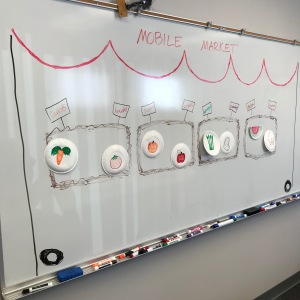
As with the How Might We question, I was surprised at the impact of this technique. Initially, it felt like more of a crafts class than a helpful tool, but after putting prototyping into practice, I have become a believer in its power. Even a “mobile market” that was little more than paper fruits and vegetables taped to paper plates elicited design-changing feedback from the guests we recruited to role play a purchase.


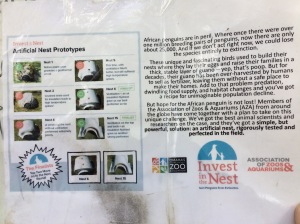
In a real and more serious scenario, animal scientists from around the world have been using the design process to create an artificial nest to prevent African penguin extinction. An international effort and prototyping have reduced the field to two designs that hold promise as a substitute habitat. While the designs may look similar, their nuances are distinct enough to matter to the penguins – something the scientists would not have known if not for prototypes and testing.

The next time you have an idea, set aside your hesitations and create a concrete version that allows you to learn about a key component of your plan. Even a rudimentary and seemingly amateur model can unlock lessons that will make your idea much stronger in the end.

Wednesday, March 28, 2018

leadership dot #2112: how might we

A team of colleagues and I are enrolled in our second Human-Centered Design class to learn more about the problem-solving process that seeks to have the end user as the core component of all the design elements. There are many aspects to this process but one concept that you can apply in your work today is asking the question: “How Might We…?”

I have been astonished at the breadth and depth of ideas that come from asking this simple question. How Might We improve health in our community? How Might We reduce absenteeism in our schools? How Might We make fresh food accessible to senior citizens? How Might We provide clean water to impoverished communities in Kenya?

Asking this question at the onset causes you to focus on what you could do rather than being limited by what may be difficult to achieve. It inspires a bit of crazy – we could improve health by building a biodome park to allow activity during inclement weather or we could redesign refrigerators for pullout vegetable drawers or we could offer American Ninja Warrior programs at all elementary schools, etc. How Might We (lovingly abbreviated as HMW since it is used so frequently) places the emphasis on possible solutions and action.

The next time you are faced with a problem at work or home, start generating solutions by asking the HMW question. It is only one small aspect of the overall Human-Centered Design process, but one that packs a mighty punch on its own.

Thursday, March 15, 2018

leadership dot #2099: test run

Yesterday I went to a meeting to learn about new regulations for a grant I am writing. There is a substantially new financial reporting form, and within minutes of reading it, many of the attendees had questions about what information was needed. The administrator did not know the answers; the financial reviewer was not available, and we left the meeting with more questions than answers.

I think of how many times we are all guilty of preparing a new form or policy that makes perfect sense to us but ends up being confusing for the user. Wouldn’t we be better off if we made it a part of the process to test our products or process with those who will be using it before implementing them?

Prototyping is precisely the final stage in Human-Centered Design, where a model or draft of your concept is shared with those who will be engaged in the solution. The goal is to get feedback from the end users early in the process to reduce your risk, learn what is/isn’t working, and make iterations to change the design for the better.

It may feel like it takes more time to prototype and field test, but in the end, you’ll save yourself time and gain allies as you create a better process. What idea do you have that needs to go out for a test run before it’s final?

Wednesday, March 14, 2018

leadership dot #2098: hybrid

While waiting for a recent meeting to begin, the participants began discussing their dogs. My four-month-old is a cross between an English Cream Retriever and a Golden Retriever – and she was the most common of the bunch. Others had recently acquired a Bernadoodle (Bernese Mountain Dog/Poodle), a Cockapoo (Cocker Spaniel/Poodle) and Goldador (Golden Retriever/Labrador). What happened to the generic Beagle?

It seems that genetic engineering is prevalent in the dog world these days. Science has made it possible to take positive traits from one breed (i.e.: no shedding) and blend it with desired traits from another lineage (i.e. great personality). It has resulted in a robust market for all kinds of hybrids and “boutique dogs.”

It got me wondering why the same principle couldn’t be applied in organizations – taking the positive aspects of one service and crossing it with desired characteristics of another. It already happens in many online professional development courses – mixing low cost (online learning) with relevant material (formal education). Planet Fitness combines the best of gyms (equipment) with a casual user model instead of bodybuilding (free training). Southwest took the self-serve aspects of bus travel and the speed of air travel to create its model.

Ask yourself the “if only” question. If only…retrievers didn’t shed so much. If only fitness trainers were included in membership so people actually kept going. If only affordable education was offered on topics that adults really wanted to learn…Then create a new hybrid combination of your own that gets your client’s tails wagging.


Goldendoodle

Sunday, February 25, 2018

leadership dot #2081: pancake

When watching the Olympics I wondered what prompted some of the athletes to get their start; what triggers someone to begin bobsledding or luge?

But those sports seem downright ordinary when I compare them to a novelty demonstration that I saw at a recent conference. Daniel Drake is the owner of Dancakes, a company that makes customized pancakes – for parties, celebrities and college programs. It sounds crazy, but he has millions of social media followers, has traveled around the world, been on The Today Show and now has multiple, full-time “pancake artists” spreading his brand around the globe.

How does one become a pancake artist? By doodling with batter in an effort to garner more tips while working at a diner. One thing led to another and now he makes custom pancakes based off a photograph on a phone – and does so in a matter of minutes. People can gather around and watch his art appear – either on the griddle or on the big screen TV screen behind him. The cakes resemble the photograph as much as a caricature drawing would – only they are edible.

Why limit yourself to ordinary jobs? Play around with your creativity and see where your talents lead you. Maybe it’s to the Olympics, or maybe you create your own category and become a pancake artist.

The world wants whatever skill you happen to possess.

Monday, February 19, 2018

leadership dot #2075: subtraction

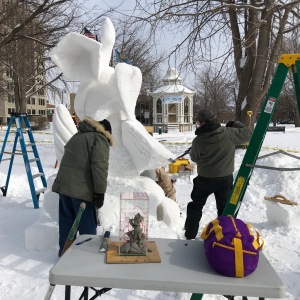
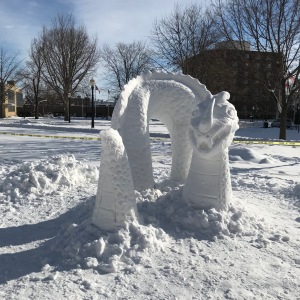
I came across an ice sculpting display and saw the parallels to how it connected to my class lesson on visioning. The artists saw something beyond what was initially there and worked to make it tangible.

There was a lot of trial and error involved as the artists worked to sand, grind and shape their vision into reality. They started with a small-scale model of their design then used it to transform an 8x8x6 block of ice into a sculpture, just as others take a seed of an idea and morph it into something grand.

One of the sculptures was carved by a group of college art students. In talking with their professor I discovered that the point of this assignment was to learn how to create via subtraction. Instead of usual artistic methods where the material is added to the piece, ice sculpting involves removing pieces of ice to shape the blocks into a design. It occurred to me that removal of what exists is often overlooked as a strategy for visioning, but may be a more powerful alternative in some cases.

Think of the kind of artist you need to be when developing your vision. Maybe you can take a lesson from the ice sculptors and focus on subtraction to find a gem hiding within.

Tuesday, February 13, 2018

leadership dot #2069: applications

I would venture a guess that most people use their smartphone primarily for functions other than telephoning, and that listening to music and surfing the Internet are not nearly as used as other applications hosted on the device. Yet, the original iPhone did not have any app options, and, as late as the iPhone3 in 2009, there were no in-app purchases available (all had to be downloaded from the computer via CD.)

Today there are over 2.8 million apps available for the iPhone and another 2.2 million for Android, all accessible with a swipe of a finger. Over $70 billion has been earned from these purchases, and apps are a key reason people have smartphones in the first place.

At the 2007 Macworld Conference and Expo, Steve Jobs famously said: “Today, Apple is going to reinvent the phone.” The first iPhone was touted as a combination of three devices: iPod, mobile phone and an Internet communicator, and at the time, a phone that did more than just telephone was revolutionary.

Even Steve Jobs did not immediately foresee the explosion of supplemental products or the revolution he would create for how apps and software were installed, but this new line of apps and direct download have made the devices indispensable for many.

Maybe you don’t need to invent a new product, rather focus on creating an enhancement or service that complements what exists.


Saturday, January 27, 2018

leadership dot #2052: commemorate

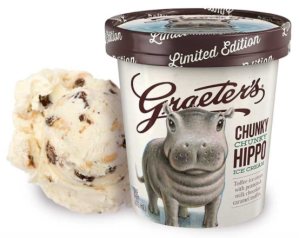
Cincinnati’s famous ice cream store, Graeter’s, marked the birth of the local zoo’s hippo by creating a new flavor, Chunky Chunky Hippo. Fiona the hippo was quickly a local celebrity, and Graeter’s was smart to jump on the bandwagon.

What is even more impressive than capitalizing on the arrival of the hippo was Graeter’s decision to leverage the event even further by re-releasing the flavor in celebration of Fiona’s first birthday. They have even sweetened the deal by commissioning a local artist to design the containers, drawing even more attention to the product.

What event can you re-commemorate? It’s easy to think of milestones in your organization’s history, but be more creative that than. The one-year anniversary of a large donation? One thousand days since a new service was offered? Your boss’s start date at the organization?

There is no need to save specialness for a one-time use.

Thanks, Lucy!

Friday, January 26, 2018

leadership dot #2051: sleep over

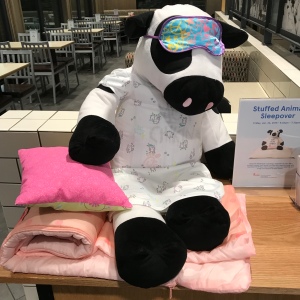
Businesses are always seeking ways to drive traffic and our local Chick-fil-A has hit upon an ingenious way to do so. Tonight is the Stuffed Animal Sleepover – a concocted event where children bring in their stuffed animals this evening (accompanied by their family, of course – and since we’re there, why not eat dinner) – and then come in the morning to pick up their stuffed friends (lo and behold, Chick-fil-A also serves breakfast!).

Children are encouraged to come in their pajamas, the Chick-fil-A Cow will be on hand and overall I expect it to be a madhouse. All for essentially no cost to the restaurant. I am sure that in the morning the staff will make up stories about the “adventures” the stuffed friends had and it will be a win-win for all involved.

Think about how you can model this promotion in your organization. Is there something that you can do to pique interest in visiting your business: providing a behind-the-scenes tour, a bank offering to put coins in the special vault for the night, having a scavenger hunt in a store or taking photos in a special place or with a mascot?

With the right idea, it doesn’t take much money to generate great interest.

Saturday, January 20, 2018

leadership dot #2045: solutions

Airports seem like great places to get exercise: they have miles of corridors for walking and most people there have ample time on their hands with nothing else to do. But somehow the logistics of walking with a carry-on in tow or dragging a rollerboard suitcase behind you diminishes the appeal, so most people end up sitting idly or balancing a computer on their lap to accomplish business.

Minneapolis airport has found a way to make work compatible with exercise while waiting in their terminals by providing treadmill desks. These machines allow people to walk and have a stable desk space while leaving their luggage resting beside them. Stand up desks have become popular in the office; maybe treadmill desks will catch on as well.

Think about the problems that your customers have. Is there a way that you can solve them with innovative solutions? Maybe hospitals could provide the treadmill desks for visitors who spend long hours waiting. Perhaps you could provide bowls at movie theatres to make it easier to share (rather than spill) big buckets of popcorn. Or you could offer sunscreen in dispensers (like hand sanitizer) at your outdoor event.

Look at your customer’s frustrations as opportunities for you to shine.

Thanks, Tracy!

Tuesday, January 16, 2018

leadership dot #2041: silos

Many times when organizations are looking for new ideas, people’s minds center around expansion in the industry that they are currently in: colleges create additional majors, banks add new financial instruments, or retailers begin to carry a different product line. All of these are appropriate sources of new revenue but stay within known parameters (and thus limits to growth).

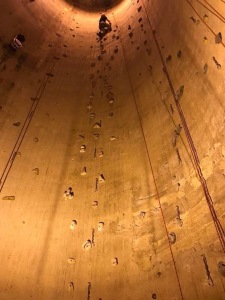
One farmer in Illinois thought about his resources in new ways. Instead of planting an additional crop or buying more acres, he moved beyond agriculture to venture into the recreation business by converting an old silo into a climbing wall. The existing height of the silo structure was perfect for climbing needs and with some retrofitting it has become a novel entertainment destination for people in the area.

Organizations often talk about “breaking down silos”, but maybe your quest should be to leave them standing – literally – and repurpose the use of your organization’s resources instead.