leadership dots are now ONLY available at: www.leadershipdots.com/blog
If you wish to receive daily dots in your email as I hope you do, you MUST TAKE (a really quick) ACTION to receive them in the new format.
1) Go to www.leadershipdots.com/blog
2) Type in your email address and then hit the "FOLLOW" button.
That's all there is to it. Easy peasy!
Thanks for reading!
In addition to hosting baseball, Yankee Stadium is also the home field for the New York City Football Club (soccer) even though the seasons overlap. As a result, the grounds crew at the stadium needs to convert the playing field from baseball to soccer and back as frequently as for one match.
On the day we were there, the crew was out laying new turf to cover the infield dirt and anchoring the soccer goal stands in the outfield. Later the pitcher’s mound will be leveled and the field restriped – all for one soccer meet before the Yankees return to baseball. This seems like the kind of transition that many would label as either impossible or not worth it, but obviously, the Yankees’ ownership feels that it is economically viable to do on a regular basis.
Are you limiting yourself or your organization too much by seeing yourself as only a single-service provider? If the stadium can make regular accommodations from one sport to another, perhaps you can expand your reach by exhibiting the same flexibility toward being a two-option organization. The grass could be greener if you adapt to where you place it.

One of my stops while in New York was a tour of Yankee Stadium, a place that is filled to the brim with history and legacy. Everywhere you go there is a reference to the 27 World Champions that the franchise has won – clearly impressive since second place is St. Louis which has only won 11.
I noticed that the last trophy that the Yankees brought home was in 2009, which made me wonder when their championship dynasty occurred. What I learned was that since 2000, 12 different teams have won the World Series, with the Yankees only winning twice in those 18 years. The Boston Red Sox and the San Francisco Giants have won three each in that time. The Yankees’ tour conveniently glosses over when the winning took place and instead focuses on the fact that it did.
For the Yankees, the enormity of their total championships clearly outweighs the recent gap in winning one. They do a great job of associating “Yankees” with “winners” in the public’s mind, even if the recent history would say otherwise.
There are many versions of any story and your job is to determine which chapter of your story to read aloud. In the Bronx, there is no doubt which pages those are.

On this Independence Day, not only do we celebrate the signing of the Declaration of Independence, but it also marks the anniversary of the passing of President John Adams and President Thomas Jefferson. They died within five hours of each other on this date in 1826, the 50thyear of the country they helped to found.
Adams and Jefferson were key patriots in the revolutionary effort and both contributed immensely to establish the democracy we have today. But after years of collaboration, the two differed significantly on how to run the country and they became bitter adversaries…
…until they chose to focus more on their commonalities than disagreements. Soon after Jefferson’s presidency, the two rekindled their friendship and became regular correspondents for the 14 years until their death.
I’m sure it was difficult for Adams to pen the initial letter to Jefferson offering an olive branch of reconciliation, but both men benefitted because he did. This Fourth of July, take a lesson from two of our country’s Founding Fathers and take the first step to find the higher ground in one of your relationships.

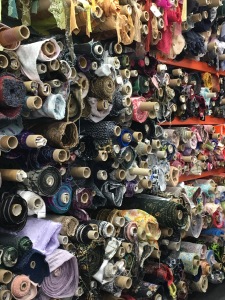
One of the things that make Manhattan great is how the city is characterized by its districts: the financial district, meatpacking district, the jewelry district, etc. While I was there we stayed in the garment district, and while I am neither a sewer or fashion aficionado, the retail this area attracts was fascinating.
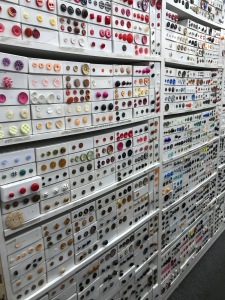
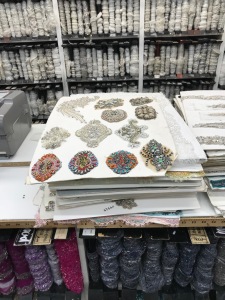
Blocks of stores carried the most unique fabric patterns, furs, laces, feathers and leathers. Entire buildings were dedicated to nothing but embellishments and garment accessories. If you wanted the exact button or closure, the Garment District is your place.
Having specialty districts, instead of just an aisle or individual store, also highlights the depth of the category and makes it apparent how little novices know or use compared to experts in the field.
Mood Designer Fabricsalone sells alpaca, boucle, cashmere, French terry, neoprene, stretch velvet, vinyl, beaded lace, brocade, spandex, and stretch mesh in addition to the usual cotton, denim and knits in every nuanced shade under the sun. They sell thread and trim, as all fabric stores do, but Mood has an entire floor dedicated to accessories. For those who work in the theater or fashion industries, having a centralized access point for the obscure and exclusive materials is essential. For the rest of us, a place like Mood is just a visual feast.
The districts of Manhattan have been established for generations but consider whether you could take a step toward creating a neighborhood or district of your own. Even if it is a loose allegiance, could you locate similar resources in relative proximity: a health food district, child-friendly entertainment district, or a pet services district? Depth attracts greater depth and expertise that makes it even more powerful.

You will no longer receive leadership dots in your email after July 6 unless you follow the steps below.
If you wish to continue receiving daily dots in your email as I hope you do, you MUST TAKE (a really quick) ACTION to continue receiving them in the new format.
To ensure there is no interruption:
1) Hit "Unsubscribe" at the bottom of this email.
2) Go to www.leadershipdots.com/blog
3) Type in your email address and then hit the "FOLLOW" button.
That's all there is to it. Easy peasy!
I hope you'll follow the dots to their new home.
Thanks for reading!
I just returned from a fantastic trip to New York City, a place that could not be much more different from where I live. Everything about Manhattan screams energy and a frenetic pace – quite the contrast from life in small town Iowa.
When was in the Big Apple, I felt transported to another world not just a different city. “New York is a great place to visit but I wouldn’t want to live there,” I said to my sister. It reminded me of the corollary that is often said about our state: “Iowa is a great place to live but I wouldn’t want to visit.” There is truth to both statements.
It is difficult to describe the environment and sensory stimulation that occurs in much of central NYC just as it is challenging to articulate what makes life on the banks of the Mississippi so amenable to those who live there. Both are their own cultures and different people will be more comfortable in each of them.
Your job is to as accurately and thoroughly as possible describe your organization’s culture to anyone who may aspire to work with you. Are you a New York, an Iowa or someplace entirely different? If you’re asking people to make it their workplace home, it needs to be a long-term lifestyle fit not just a short-term vacation adventure.


I
t used to be that there was a photo developer on every corner. Drug stores, department stores, drive up kiosks, separate one-hour photo stores – everyone had a substantial amount of space and equipment dedicated to processing pictures.
And then came the camera phone and sharing took place digitally instead of through print. Approximately 52 million photos are uploaded onto Instagram each day, and none of them need a developer for processing.
Some stores still offer photo developing, but I wonder how long they will continue to utilize prime retail space for such functions. Target, for example, has a large photo center in the front of one of its stores – it was virtually empty while I was waiting to meet someone. It seems that they could be more profitable by offering other goods or services instead of having a large, unused area showing signs of entropy. While I am sure these centers were quite profitable in their day, I believe their time has come to an end for most retailers.
Think of whether you have services in your organization that are past their prime and should be reimagined – in other words, how to capitalize on the growth in picture taking while acknowledging the decline in photo developing.
Are you dedicating space and assets toward something that once provided you with benefits but no longer does? Maybe it’s time to develop a new plan about how you picture your future.

In the midst of all the hustle and bustle at LaGuardia airport, travelers now have the option of a respite. Soundproof cubicles with a writing shelf are available to rent in 15-minute increments (for $30/hr). It reminded me of old-fashioned phone booths, only with an Internet connection and place to sit down.
These booths provide a place to conduct calls, participate by video or just get work done without distraction. They bill it as “a workspace to think, create, connect and recharge.” I could use one of them in my home!
In a world of open office spaces and community gathering points, there is still something to be said for quiet. The Jabbrrbox vendor found a way to conveniently make it available at LaGuardia through rental of personal booths. Perhaps you should do a noise audit at your organization and create your own quiet boxes if necessary. Providing a silent option can golden to some employees.

In a move that I will never understand, the Iowa state legislature approved the sale of fireworks but left it up to individual municipalities to decide whether or not it was legal to shoot the devices. In the city where I live, it is illegal to light off fireworks, but very legal to sell them. Thus, in several parking lots throughout town, we have big tents of vendors selling the pyrotechnics that are forbidden to be (legally) used.
Of course, the vendors have no incentive to clarify the distinction to customers, and buyers assume that they are legal because they are being sold everywhere. The police have been trying to spread the word that a $250 fine awaits those who shoot them within the city, but by then the damage will have been done.
Think about whether your organization has a policy with an incongruity similar to the fireworks debacle. Does your business office preach stewardship yet deny employees opportunities to get a warehouse membership or purchase from a cheaper vendor? Does it claim to put customers first yet cut the support it gives to the call center? Or does your organization officially claim that flextime is available but shuns those who take advantage of it?
Whether through a mismatched set of laws, inconsistent policies or conflicting norms, no one benefits when there are mixed messages about whether something is appropriate or not. It’s fine to lay down the law but only if you are prepared to make everyone follow it.

I have a new neighbor – who is installing a new pool – which requires the installation of a new section of fence to replace my adjoining chain link with a regulation height barrier. The men who were here yesterday to do the job not only installed the new fence section but spent a considerable amount of time realigning the existing fencing so that it all was even.
Their company did not install the original fence, but they took the time to improve it. No one remembers who did the initial work, but the current contractor’s reputation is what would be tarnished if the new work looked shoddy for whatever reason. One section installed correctly becomes invisible if the surrounding sections are out of kilter -- so they did the entire fence as it should be done.
Do you have similar pride in your work or do you focus only on the piece that is “yours”? Take a lesson from the fence installers and embrace a larger view of your duties. Even if you technically only have responsibility for a section, your integrity is judged on the whole.

Air travel, something that used to be a luxury for the affluent, has become a chaotic experience for the multitudes. I was just in O’Hare and LaGuardia where oversold flights, insufficient airport seating and understaffed ticket counters contributed to a harried boarding process for all.
But what really made it mayhem was the illogical policy airlines have regarding checked baggage. It makes no sense to me that airlines charge people to check their bags – thus encouraging carry-ons – but have inadequate space to accommodate them. On several legs of my trip, the final boarding group was mandated to check their roller-boards at the gate, thus doing for free what would have cost $25 if the passenger had done it in a timely fashion, but now doing it at the worst possible time and place from an efficiency perspective. It seems crazy that airlines push a practice that delays the process and requires much more manual work by the airline without generating revenue. The last-minute free checking further discourages people from checking their bags for their next trip when they are guaranteed to pay to do so; instead, many people will take their chances that they’ll get a free pass at the gate.
Wouldn’t airlines rather have people check their bags? It would expedite the boarding and deplaning processes and avoid all the last-minute gate checks. It seems to me that they are incentivizing the wrong thing: checked bags should be free and carry-ons that don’t fit under the seat should incur a charge.
The next time you implement a policy, think through what would happen if it worked. What if your policy to encourage one set of behavior was wildly successful: what implications would that have? What are the downsides to a shift in practice and how can you mitigate them? All policies have inherent baggage inherent in their implementation. Your job is to check the negatives and carry on with the positives instead of doing the reverse by default.

In my work with organizations, I often encounter people with lofty goals who want to develop the next big thing for their group. There is a focus on “add, add, add” and creating something new. I liken it to someone making a necklace by focusing on the baubles rather than the string.
I think a more pragmatic and productive approach is to begin by assessing the pearls that already exist in an organization. By pearls, I mean the strengths, existing programs, signature services, events or the brand assets that are in place and that connect to the goal. Next, consider how these can be assembled into a more powerful and cohesive whole to increase the impact without further taxing the resources to produce them. By identifying the “loose pearls” you already have that could be strung together into a “necklace”, it allows for more rapid evidence of progress and more clearly identifies the gaps that, if filled, could make the impact more robust.
The temptation is to “think big” so focusing on existing pearls often feels insignificant. However, tying a ribbon around current components or “stringing the pearls” doesn’t have to be the end point, just the starting one.
Remember that the classic pearl choker makes an impact without being flashy. No one ever said: “Oh, the pearls on that necklace are too small.”

I recently learned about a new service called Bookshout, a company that provides audiobook codes to corporations so, in turn, they can distribute “books” to clients, prospective clients or employees. It creates a simple method of distribution, either allowing the recipient to choose which book they read or making it easy to get a required reading into the hands of everyone throughout the company. They claim that through Bookshout, people have read 8,400,820,497 words!
And they would know. Beyond promoting its distribution system, Bookshout also brags about its ability to track the use of the e-reader codes. For individuals, it allows people to set reading goals and track their progress against friends (or strangers) – in short, adding gamification to the leisure reading process. You can see how you rank in total words read vs. others in your social circle if you care to know that information.
For companies, Bookshout will “gather critical data to verify who is actually reading” – sharing with the company the code user’s reading habits and total words read. They promote it as "audio with accountability." So much for skimming the summary before your corporate retreat!
For some individuals, the tracking feature may be appealing, but in the company realm, it feels too intrusive for me. What kind of a culture does the corporation have if they have to monitor reading habits? And if you don’t trust your employees to read a book, how do you trust them with your product or service? Any goodwill that could be garnered by providing professional development or a common reading experience seems to be lost in the data collection.
Technology allows us to easily capture and report an increased level of detail and data. But just because you can doesn’t mean you should. In my mind, that goes for Bookshout, too.

Some of the interests cultivated as children last for a lifetime. Or so The National Park Service hopes.
Though their Every Kid in a Park program, the National Park Service is working to engage children at an early age and expose them to the wonders of the National Parks – presumably to make them life-long lovers of America’s beauty.
The NPS offers all fourth-graders an Annual 4thGrade Pass that allows the child – and their accompanying family – free admission to federal recreation sites during their entire fourth-grade year. “Free” is an irresistible word to many, and the hope is that school groups or families will capitalize on the opportunity to visit national sites without charge.
Every Kid in a Park program is a great way to develop a pipeline of supporters and future customers. The free pass may be enough of an incentive to plan a visit, and the sheer beauty of the national parks themselves should be enough to keep people coming back.
Like the Mariners Bark at the Park program described in yesterday’s dot, this program has little direct cost and lots of potential upsides. If it doesn’t feel right for your organization to attract pups, maybe it can focus its efforts on cultivating tots instead.
Thanks, Meg!

People in the United States are crazy about their dogs – all 90 million of them-- so it is no surprise that companies and organizations try to capitalize on that to earn their piece of the multi-billion-dollar pet industry.
One of the most clever events in this category is the Bark at the Park promotion at Safeco Field in Seattle. On four special nights this season, you can purchase a $50 Dog Pack which includes “a human ticket, dog ticket, Mariners dog giveaway and postgame walk around the bases”. Giveaways include a Mariners dog food bowl, tennis ball launcher and water bowl. If I lived in Seattle, I would be there!
Except for the giveaways (which undoubtedly have a sponsor) and the "waste disposable management team", this event costs them nothing, yet I would guess that it will go a long way to boost attendance on otherwise uneventful weekday nights.
What can your organization do to earn the goodwill and greenbacks of the many dog lovers that you serve? It doesn’t have to be every day but creating a special occasion that includes the pups will have you wagging all the way to the bank.
Thanks, Meg!

I know several people who are trying to go “paperless” as an organizational strategy. There is certainly something to be said for the ease of access for documents in the cloud, the weightlessness of toting your entire filing system with you and the ability to let an algorithm to instantly find a document from several years ago.
But I like paper.
I think about my dissertation – stored on a floppy disc – that would be essentially lost to me if I did not have a hard copy. I have hundreds of slides from my childhood that I have seen a few dozen times, but every day I see the printed photos that I have framed. I have files with articles that are older than the audience I am using them for, but that I am able to locate and reference almost as quickly as Siri. I know that countless PowerPoints and computer files have been abandoned in between job transitions, but the valuable work I have done is still with me on paper. I have handwritten notes from decades ago, but few of the nice emails I received before this year.
Beyond my own personal love affair with print, I wonder what the archivists and historians will use to tell the story of our era. I have read the letters between John and Abigail Adams that give such a poignant glimpse into life in the early days of our country – and I doubt someone will be able to access the computer files or phone texts of recent presidents and their wives to replicate that insight in the future. Old Moleskins, sketchbooks and journals have told the story of countless inventors and scientists and given a glimpse into emotion beyond what could be conveyed in a typed word. Would the Ann Frank story have even survived if it was written on a computer?
Don’t let technology cloud your thinking against keeping some of your treasures in print.

I think time management is harder these days because people have so many different sources of input. It used to be that everything came to us via the mail or by phone, but now we have content coming from multiple social media platforms, voice mail, messaging, texts, email, shared sites like Slack, etc. It is hard to keep track of it all.
I know there are apps out there like Evernote that serve as a collection point for the barrage, but there is still not a way to synthesize electronic and paper. I need a system for quickly finding what I read in a magazine that relates to something I saw on LinkedIn and ties in with a photo I took. I find myself with imperfect methods to do so, and, as a result, spend more time that I would like to retrieve all the inputs I am trying to integrate.
As a time management technique, it is hard to beat the trusty manila file folder that can instantly group together disparate sources of input and the invaluable spiral notebook that can serve as a repository for all the ideas swirling in my brain, but even these are lacking in their ability to be searched or easily shared. So we all move forward with methods that work for us, compensating for the deficiencies by what we gain in familiarity and the efficiencies that come from repeated use.
I think the lesson to be learned is to minimize the clutter of inputs in the first place. If you routinely don’t apply or share information from a magazine, perhaps you should consider canceling the subscription. If your social media feeds are filled with posts from people with whom you have no other contact, maybe a culling of your groups is in order. If you receive regular email feeds that you routinely delete, it may be worth the time to unsubscribe.
Even with all the productivity apps that are available and the advances in communication and technology, we still need to rely on our brain to connect the dots and make meaning of what comes in. Be wise about what (and how much) input that is.

When people leave an organization those left behind bear the burden of the departure, but except in rare instances, the organization carries on despite the vacancies. I liken this to a Jenga tower.
Even with pieces (people) missing, the essence of the structure remains. The tower is resilient and can handle a few holes, but when this occurs all actions require significantly more time and effort to be executed. The more pieces missing, the higher the stress level.
Some pieces can be removed without impact, but others are key pieces that create great instability for what remains. Neither Jenga or an organization has unlimited capacity to absorb departures, and at a given point, the tower will fall. It’s much easier in the game than in reality to pick up the pieces and rebuild, but some organizational leaders act as if there is no distinction.
If you have staff vacancies, Jenga can be a useful analogy to help the continuing staff to put the departures into perspective. With a piece or two missing, the situation isn’t as dire as it may first seem. But Jenga can also help you as a leader to remember that the overall situation becomes more precarious with each piece that is removed.

I am working on a major project with a colleague and we divided up the tasks equitably. Some tasks he is doing 100% and I am taking on other tasks, but we were both comfortable with the contribution of each other.
External events recently caused some circumstances to change, but we plodded on with the same workload distribution. Ironically, both of us recognized the need to realign some responsibilities but were hesitant to broach the subject: one for fear of being seen as doing too little and the other for fear of being seen as taking over or taking on too much. Once the topic was raised, we were able to quickly, amicably and appropriately shift who was doing what. It will make for a better project in the end and go a long way toward saving our sanity on the road to get there.
We often make asking for help harder than it should be. We internalize it as a sign of weakness when instead it is a sign of strength. It reminded me of the BRAVING acronym promoted by Brene Brown as a litmus test to define and develop trust-filled relationships. The “N” stands for NonJudgment: “I can ask for what I need, and you can ask for what you need. We can talk about how we feel without judgment.” I was grateful that I could have such a conversation focused on solutions instead of drama or guilt.
The next time your circumstances change and you need to adjust your responsibilities, I hope you find yourself in a partnership where a foundation of BRAVING has been established. Start today to cultivate it in all your relationships that matter.


