Showing posts with label then & now. Show all posts

Sunday, July 1, 2018

leadership dot #2207: develop

It used to be that there was a photo developer on every corner. Drug stores, department stores, drive up kiosks, separate one-hour photo stores – everyone had a substantial amount of space and equipment dedicated to processing pictures.

And then came the camera phone and sharing took place digitally instead of through print. Approximately 52 million photos are uploaded onto Instagram each day, and none of them need a developer for processing.

Some stores still offer photo developing, but I wonder how long they will continue to utilize prime retail space for such functions. Target, for example, has a large photo center in the front of one of its stores – it was virtually empty while I was waiting to meet someone. It seems that they could be more profitable by offering other goods or services instead of having a large, unused area showing signs of entropy. While I am sure these centers were quite profitable in their day, I believe their time has come to an end for most retailers.

Think of whether you have services in your organization that are past their prime and should be reimagined – in other words, how to capitalize on the growth in picture taking while acknowledging the decline in photo developing.

Are you dedicating space and assets toward something that once provided you with benefits but no longer does? Maybe it’s time to develop a new plan about how you picture your future. 

Saturday, June 9, 2018

leadership dot #2185: reclaim

At airports and public spaces around the country, there are vestiges of phone booths from days gone by. Most establishments have removed them and replaced them with something else entirely, but the Denver airport repurposed them into private workstations. While passengers may not require the physical phone itself, they still appreciate the sound buffering that the padded sides afford as well as the desk space in order to accomplish their work.

Think about spaces you have in your organization. Have they remained stagnant or outlived their usefulness? Perhaps you could refresh them to add a different level of functionality: the counter that holds the fax machine could become a clear workstation, an alcove could gain a small table instead of just seats to make it easier to work on a laptop, tellers could sit at a desk instead of behind a counter or hotels could replace spaces that hold physical phones and alarm clocks with wireless printers for their guests.

Just because something claimed a space at one time does not give it the right to keep it forever.

Saturday, April 28, 2018

leadership dot #2143: shopping

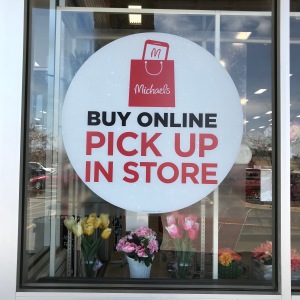
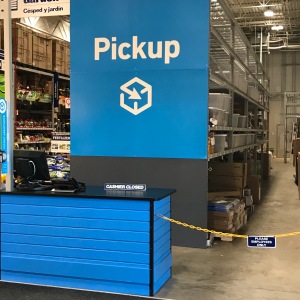
The trend seems to be that people can order things online and pick them up in the store. In the past few weeks, Michaels, Target and Lowe’s have added prominent signage and pick-up areas for people who avail themselves of this service. Some will even bring it to your car.

Perhaps it is a strategy to get consumers into the brick and mortar stores – having them do additional shopping when they come in to pick up items. Maybe it is an incentive to have people shop more because they can do it more leisurely online. Maybe it is because we are getting lazy.

A few years ago, having groceries delivered to your home was a luxury for the rare few, and now it is commonplace. Will Target begin direct deliveries soon – not waiting a whole day to receive something via UPS or the Post Office, but having it arrive as quickly as a pizza? Will stores just become distribution centers instead of places to shop?

For whatever the reason, the buy online/pick up in store movement is gaining momentum. How will your organization be impacted by this? Think about the products or services you expect people to come in person to receive and consider whether there is an easier way to deliver them to your customers. Going shopping in person may soon be as antiquated as having to go in a bank to do your transaction with a teller or calling a travel agent to book your flights.

Monday, April 23, 2018

leadership dot #2138: learning

The old television show ER started streaming on Hulu. I was riveted to the series when it originally came out in 1994 – planning my evenings around each weekly episode so I didn’t miss its singular airing. Now that the show is available again, I felt the tug of nostalgia to watch it for the second time.

What has been most prevalent for me is not the flirting between Doug Ross and Carol Hathaway – the main theme of the original airing – but the vast improvements that we have made in technology since the show was made. There were no cell phones or hand-held computers, and no camera was to be found even when Bulls star Scottie Pippen came in. Surgeons lived by their pagers which displayed no more than a number to call from the closest pay phone. The televisions were consoles. The phones were landlines, even rotary dial ones, and were attached to voicemail recorders that became full. There was no electronic social media. Patient records were kept by hand on paper charts while the surgical schedule was maintained on a whiteboard. Lab results were returned via dot matrix printer and ultrasound results were stored on VHS tapes. Thick phone books were the lifeblood of the admitting desk.

Think of all that we have learned since 1994. Most of us have a working proficiency on the new technology that has come our way – and we have done so without any formal classes. We have learned continually, through trial and error, through one-on-one tutorials and by general sharing of information.

Expand this behavior and don’t limit your learning to just the new gizmos and gadgets. Keep abreast of trends in your industry, of innovations in the world in general or just learn a new technique in your hobby. If you stop and look back at all the knowledge you have amassed since 1994, you will amaze yourself. Be able to say the same thing when you’re watching This is Us beamed onto your wall twenty years from now!

Wednesday, April 18, 2018

leadership dot #2133: scheduled

At a mall in Minnesota, they literally tore down the JC Penney anchor store to make room for a new fitness center. It is a sign of the times – not only that brick and mortar retailers are struggling – but that gyms are thriving. There seems to be one on every corner.

I don’t think that “back in the day” we had any gyms, save for a sweaty little place where weightlifters and aspiring boxers went to work out. They certainly were not for the average person.

As a kid, our exercise was sunlight-driven or when-mom-calls-you-home driven. We got our exercise through play. Now children seem to get the majority of their exercise through structured activities that are calendar-driven: when there are practices or games. Our exercise came through goofing around with kids in the neighborhood, pick-up games of basketball or kickball in the street; today it comes through sports.

I think that gyms provide that structure after high school or college when the organized athletic events end. Gyms allow exercise times to continue to be scheduled – through classes at the gym or appointments with a trainer -- and keep “exercise” as a defined event rather than an outcome of other activity.

Think about how your calendar dependency has evolved. Are there things besides exercise that need to be scheduled on it – time for friends, time to be alone, time to read or meditate? Do you need to self-impose a membership plan (like at a gym) where you make that commitment to do an activity that you know is good for you? Very little “just happens” anymore; we don’t just go out and play. Reserve time on your calendar for the things that are important.


Friday, November 17, 2017

leadership dot #1995: Generation Z

There is a lot of attention being paid to the Millennial generation right now when in reality, it would behoove organizations to spend as much effort preparing for Generation Z. Gen Z, as it is lovingly known, represents the generation born between 1995-ish and 2010 or so. They are the college students of today and the leaders of tomorrow, representing a quarter of the population and soon will have a significant impact on the workforce.

Gen Z grew up with technology and social media integrated into their lives. They have communicated all their lives through screens and will expect the use of technology to be pervasive in their organizations. Gen Z uses this technology to make their lives easier and to receive information/action on demand. Gen Z wants a work/life blend – and the ability to use the resources available to them to work from anywhere at anytime. They are more interested in the community than just themselves and also have a strong interest in entrepreneurship.

Think about the world in which Gen Z grew up: they never had to learn how to use technology – it was omnipresent since they were born. They carry this expectation onto campus and into the workforce, requiring organizations to rethink how they handle processes and transactions of all types. Yet Gen Z is not looking to automate everything; they value experiences, one-to-one interactions and being involved in decisions.

Gen Z employees or entrepreneurs will be the ones to lead efforts on 3D printing, wearable technology, driverless cars, artificial intelligence and workplace inclusion. They will continue the movement to integrate smart learning into every facet of life and become active designers of both social and economic change.

As an organization leader, you can embrace their thinking and be inspired by Gen Z or try to hold on to more established ways of operating. Succeed by articulating and providing value, creating experiences that allow them to interact and paying attention to the user experience. Ready or not, Gen Z is coming and bringing a wave of optimism and motivation that will benefit us all.


Thursday, November 9, 2017

leadership dot #1987: binge

Tonight is the 300th episode of the television drama Grey’s Anatomy. If the average episode is 42 minutes, that means I have already spent almost 210 hours as a couch potato because of this show.

OMG.
I could have written a book in that amount of time.


While some have spread their 12,558 minutes over the course of 14 seasons, I came late to the Grey’s party, but thanks to the marvel of Netflix, I was able to catch up. In a few months. Watching far more than 42 minutes at a stretch.

Binge watching has changed the landscape of how television is consumed. It is becoming increasingly rare to watch just one show and to watch it as it originally airs. Even people who could do that often save up a few past episodes so that they can watch them as a set – somehow making it more of an experience than an individual event.

Binge watching has implications far beyond television though. People are getting accustomed to (or should we say “being trained”) to consume things on an on-demand basis and to receive an on-going feed of content they desire. Membership sites with monthly fees are available for delivery of almost every product imaginable. Sites like Netflix and Hulu have vast repositories of content that extend lives of television shows and movies. Now if a show gets a good buzz as the series builds, they can still capture an audience. People want to be able to go back and “catch up” rather than being told they missed their opportunity.

Has your website and content delivery been repackaged to allow for “binge-access” for your clients? It’s no longer enough to just have information about the event: now you need to record it, share it and archive it forever. Have you preserved your newsletters, magazines and other content for someone to retrieve at any point so they are able to meet their need at the moment? Do you provide an easy way for someone to dive deep into your organization and learn about your services, such as when preparing for a job interview or to hire you as a client? Do you have educational resources available for customers to learn all they can about a topic when a specific problem arises?

Binge watching is the new norm for entertainment, but I predict it is going to spread over to consumption of educational content as well. Think about how you package your content so you don’t need a crash cart to resuscitate your brand.

Tuesday, October 31, 2017

leadership dot #1978: too far

It used to be that every house on the block offered candy to trick-or-treaters, but then allergies and health consciousness kicked in and the candy bars were no longer standard. I am all for offering a variety of Halloween treats to avoid overloading children with excess sugar, and for offering non-candy treats as an option. (See the dot from last year about the teal pumpkin project)

But Dole has taken the healthy-holiday idea too far by offering mini-salads as an option for those who come to your door. I doubt that most would see it as a trick instead of a treat!


What’s next? Pumpkin Spice Lettuce? There is a limit to how much nutrition you should promote on a holiday centered around sweetness.

Keep the context and your audience in mind when planning advertising or product launches. You don’t need to insert yourself into every holiday or fad.

Thanks, Meg!

Sunday, August 20, 2017

leadership dot #1906: old school

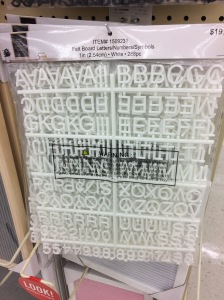
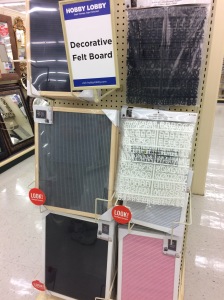
There are some days when I wish I had a warehouse to store everything I have ever owned so that I could cash in on things when they come into vogue the second time around. Such was my feeling when I saw the display of "decorative felt boards" at the craft store.


Back in the day, these old school felt boards were called "spaghetti boards" because the rows of felt look like the pasta all laid out end to end. Organizations had cases of those little plastic letters that the unfortunate person using the board first had to locate, then stick into the 'spaghetti' one by one. The letters were never even, they often fell out and overall the boards were a pain in the neck to use. We were more than thrilled to toss all of it when computerized signs became an option. I can't believe they have returned!

But there they are -- in a glorious end cap display -- featuring the nasty pull-apart letters and the felt boards just waiting for those who want a low tech option for decorating. 
Retro is all the rage these days. Typewriters, turntables and now spaghetti boards are around again. What lurks in your attic or the bowels of your building that you could revitalize and give a second life? 


How does this dot connect with you? Leave a comment and share your observations with others.

Wednesday, July 26, 2017

leadership dot #1881: mix

One of the traits of Generation Z (those born between 1995-2012) is their desire to customize almost everything. The book Gen Z @ Work labels it as Hyper-Custom and it has become an expectation for those in the younger generation to want to have a choice in places where none was offered before.

I thought about Gen Z when I was at O'Hare Airport and saw the Garrett's popcorn stand.  Garrett's has been a Chicago staple since 1949. At first, they offered plain, caramel corn and cheese corn. Then they combined caramel and cheese and became famous for their mix. Later versions with nuts were added, but it still meant about six choices on the menu.

But six isn't enough for today's consumers. Wisely, Garrett's has taken the mix concept further and is trying to respond to demand. The company now features "Which Mix is Your Fix?" and encourages customized combinations in any format that you desire. Combine caramel and butter for the Buttery Goodness Mix or cheese and butter for the Gold Standard Mix. Or any flavors you wish shook together in the bag for a delicious snack.


It is no longer enough to offer just your famous mix that has been popular for half a century. Gen Z wants to create its own mix. Just like they want to create their drink from one of the thousands of combinations in the new Coke fountain machines or read only from a media feed of sources they chose.

Burger King has been saying "have it your way" for years. It's time that your organization began embracing their slogan as your own. Gen Z wants to mix it up -- in more ways than one.

Gen Z @ Work by David Stillman and Jonah Stillman, 2017.

Saturday, July 22, 2017

leadership dot #1877: cast away

There is a buzz about how Artificial Intelligence is going to change the landscape, but I think the true game-changer is going to be 3D printing. The magic of 3D is becoming more accessible to the masses and transforming things on a daily basis.

The latest example of 3D in action replaces medical casts with plastic ones: custom fit, waterproof, lighter, more airy and even fun with personalized words and messages. No more signing of the cast: now yours comes with motivational sayings printed in. How much more fun is that than the traditional plaster versions?

In the 1967 movie Mrs. Robinson, Dustin Hoffman's character was told "there's a great future in plastics." And with 3D printing, it is even more true today. It's hard to wrap your mind around all the things 3D printing can do, but once you have that vision, implementing it is only a matter of time. 

Think about what you could cast away that is currently done in a clunky or generic manner and head to your local library Makerspace to see if you can't take your idea to a new dimension in 3D plastic.


Wednesday, July 5, 2017

leadership dot #1860: at your service

In 1827, Robert Roberts published the House Servant's Guide, a comprehensive collection of how to be an exceptional butler. Written for two of his young friends just entering the profession, Roberts was the precursor to Hints from Heloise and provided instruction not just on etiquette, but on how to resolve all types of cleaning problems.

Roberts offered tips on such items as how to prevent flies from settling on pictures, how to recover a person from intoxication, how to take ink spots out of mahogany, to restore carpets to their first bloom, to preserve apples for the year round and to make lemonade water of a most delicious flavour. In addition, he offered his proteges advice on the benefit of early rising, the order in which to attend to their work and regulations for the dinner table.

It may have been the first comprehensive orientation and job training manual for any position, and it happened to be written for African American butlers almost two centuries ago. 

The House Servant's Guide provides not only entertaining reading and a glimpse into the past, but also serves as a model for the detail that is helpful in modern day on-boarding. It contains a mixture of techniques and norms, as well as encouragement and advice on how to be successful. 

In 1827, it was a production to write such a guide -- you didn't just sit down at your laptop and then hit print -- but Roberts persisted in writing the book and getting it both published and promoted. Use him as a model as you onboard your new staff.


Saturday, July 1, 2017

leadership dot #1856: well suited

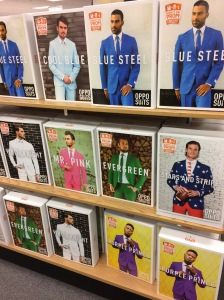
It used to be a given that young men would rent a tuxedo to go to prom. I remember having my date ask me what color I was wearing so that he could coordinate his bow tie and cummerbund to match my dress. How the times have changed!

Now, not only does the gentleman not need to rent a tux, he may instead buy a suit especially designed for the prom occasion. And his selection has as many colors as the girls' dresses: cool blue, purple prince, Mr. Pink, white knight and even stars and stripes. Who is going to need to coordinate with whom?


For $79.99 (before coupons!), the guy can pick up a suit-in-a-box at Kohl's and have fun wearing something special for the special occasion. It is a niche that has been overlooked and if they even remotely fit someone, it could be one that takes off.

Open your eyes to the possibilities: there is nothing that is set in stone. You would be well suited to consider where money is being spent and see if you can redirect those funds toward you in a creative and out-of-the-box (or, in this case, inside-the-box) kind of way.

Monday, May 15, 2017

leadership dot #1809: over time

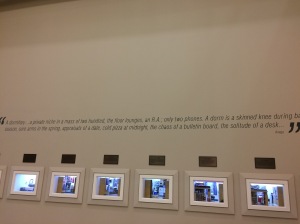
The residence hall experience is often overlooked in alumni tributes which tend to focus instead on sports achievements or academic accomplishments. But last week, I was at Bradley University where their fancy new alumni center contains a display about the evolving nature of residence halls rooms over the decades. Anyone who has ever lived on campus knows that students bring their personalities with them to college and that their rooms become a symbol of the times.
In miniature, Bradley captured these cultural statements and showed their progression from the 1940s to the present. Not only does the technology increase over time, but the amount of “stuff” multiplies as well. In 1940, there was not much more than beds and desks. Now, there are entertainment centers with giant HD televisions and X-boxes along with lofts, exercise balls, and Nutribullets for the morning smoothies.
In one wall, Bradley captures the school spirit and character of students over the course of nearly a century. It is a powerful visual that shows the subtlety of change from one decade to the next, but the enormity of it over the course of time.
Think about how your organization can capture one small element and illustrate its impact on a timeline. It can evoke great nostalgia, but also pride in what has become. Dorothy said: “ there’s place like home.” How nice when you can see “home” as you remember it at that moment in time and still feel like you’re at home in the present day.
The 1940s
The 1970s
Present day

Sunday, May 7, 2017

leadership dot #1801: not forever

It was the city-wide garage sale this weekend and, of course, I made the rounds looking for treasures (aka buttons for my collection). I did not find too many of those, but what I did see for sale was Christmas trees. In my unscientific survey, artificial Christmas trees were the number one item being discarded this season. Truly, it was rare when a sale did not feature a box stuffed with the fake evergreen.
When I started asking about this, I learned that many people "just didn't have time" to put up a tree the past few years. How sad that our lives have become so busy that a centuries-old tradition is being put to the curb (literally). If it's not fast and pre-packaged, it seems to be relegated to the wayside.
Think about the traditions you wish to preserve in your organization or your family. You may find it hard to believe that future groups won't cherish and maintain that function forever, but if the iconic Christmas tree can be sold for a few bucks, it seems that nothing should be taken for granted. Even ever-green doesn't mean forever.

Saturday, May 6, 2017

leadership dot #1800: information

At a recent garage sale, I saw a box of encyclopedias available for the taking. Back in the day, the good 'ole Brittanica was the font of all knowledge: everything you needed to know all bound in ten intimidating volumes. Since then, we have moved to the internet, of course, and Wikipedia can tell you more that the encyclopedia ever did.
A new iteration general-information-all-in-one-place is now in development. Blippar is a software working to add visuals to the vast array of knowledge that is already gathered. You will be able to use your camera to access layers and layers and layers of information about the picture you have taken. An example was shared in Inc. magazine showing how it migrates from discovery to selection to information and then even to augmentation of data. I see vast amounts of time being expended as people surf deeper and deeper into a topic!
As you teach students, your staff or your children the skills of life, one of the pressing needs is going to be how to prioritize and assess the limitless amount of information that they will encounter. It's no longer enough to learn how to spell C-A-T or to even identify one; now people need to know when enough is enough on any given topic. Tomorrow is going to make the encyclopedia look like Cliff Notes.
Inc. March 2017

Friday, April 28, 2017

leadership dot #1792: live interaction

A webinar about Generation Z (those born since 1996) pointed out how communication styles are different for those who are Z's than even for Millennials or other recent generations. The speaker pointed out that Generation Z prefers to communicate on-line rather than in-person, and that when they do share "live" that their grammar and communication skills can be "frightening." 
I thought of this when I heard from a colleague that he had just visited an "all i-Pad bar" at the Minneapolis airport. While there is still a human to prepare the food and beverages, all ordering and paying is done via a technology-only interface. My colleague recounts: "There was a bartender and only two people at the bar. I asked him if I could get a Coke and something to eat. He said yes and directed me to one of the 500 iPads they had all over the place. I said, 'Can’t I just tell you what I want?' and he said: 'No, you have to order all things through the iPad and pay there as well.' Another older lady sitting at the bar just looked at me and rolled her eyes."
Ordering food is one more learning lab for conversation that has gone by the wayside. No wonder younger people prefer technology; they have far more practice with it!  Think about the skills you can develop from chatting with a bank teller, a server, clerks in retail stores, cashiers (instead of self-checkouts), travel agents and dozens of other professionals with whom you make small talk during your transactions. Those opportunities are lost to automation, and while it has made life far easier, it has also made communication skills far worse.
While the younger travelers will enjoy ordering their food in the human-less method to which they have become accustomed, there is something lost in the process. A bartender app can't replace the ambiance of "shooting the crap" or cheering together over a sporting event. An iPad can't teach people how to develop conversational skills or to learn interpersonal confidence. Only a human can do that. 
Before you trade off engagement for efficiency and swap talk for tablets, think twice. A live interaction is a gift not to be wasted.
Thanks Toby!

Wednesday, April 5, 2017

leadership dot #1769: concession

In a recent class I taught, there were several students who were instructors with the university's ROTC program. In one of our discussions, we talked about the impact of Millennials on the military -- and whether their influence had permeated the traditional top-down culture of our country's armed forces.
The short answer -- not too much -- yet. Much of the Army's leadership is decidedly not Millennial age, so the impact may come in the future. But for now, the most visible change they identified came in the form of a "stress card." Should the exercise or training become too much for a solider, they can give their commander this card and be relieved from some of the exercises. I wonder how much it is used -- and the peer repercussions from doing so -- but it is an indication that things they are a changin'. 
Think of what your organization has done to acknowledge the Millennial workers on your staff. Have you allowed them to have a voice at the table and a choice as to how their time is allocated? Do you provide frequent feedback and consciously note opportunities for praise? Have you included them as members of a team and sought their commitment to the purpose of their work?
You don't have to provide a stress card, but you do need to find ways to engage everyone who works with you to get the most from their loyalty and performance. If the traditionally hierarchical military is adapting, certainly your organization can too.

Wednesday, January 25, 2017

leadership dot #1699: unsterile

James Garfield had been the United States president for just four months before he was shot in 1881 while walking to his train. The official cause of death is blood poisoning and complications from the shooting, but ignorance and stubbornness played a more substantial role.
At the time, doctors in America did not use antiseptic or take proactive measures to lessen germs and infections. The Europeans had already adopted such practices, but in the U.S. doctors lay Garfield on the train station platform and no less than 12 of them probed his wound with unsterilized fingers in search of the bullet! While they had the best of intentions, hindsight reveals that Garfield would have likely survived the gunshot, even with the bullet remaining inside him, had it not been for the human-induced germs. Instead, he died a grueling 80 days later.
Doctors in the United States soon embraced antiseptics, but at the time their actions were more detrimental than doing nothing. It's not that they did not know about the Listerian Theory that germs caused disease; they just did not believe it because it ran contrary to their decades of thinking that illness was caused by things you could see.
Consider the ways you may be acting like the doctors in 1881. What knowledge have you dismissed because it does not fit with your current model? Have you done all you can to expose yourself to new thinking and modern advances in your field? Are you open to asking for help when confronted with a problem? Are there things you are doing that are causing more harm than good to your self or your organization? The medical community learned from President Garfield's death; perhaps you can too.
Thanks to Margo Kemp Johnson for this idea.
Source:  How Doctors Killed President Garfield, CBS News, July 5, 2012. To read more, click here.

Tuesday, January 24, 2017

leadership dot #1698: democracy

You may have heard that Ringling Brothers and Barnum & Bailey Circus will have its final performance in May. The circus, an attraction that used to draw crowds to fill the big tops and employ a thousand people, is closing after 146 years of entertainment. In 1971, the circus was sold for $40 million but now it is months away from disbanding.
I thought of this over the weekend when I was a scavenger in the shell of our Kmart store, now holding the final days of sales before it closes. In 1990, Kmart was the second largest retailer in the United States, just behind Sears. Kmart had 2,165 stores in 2000 and now it has less than 800 and falling. Blockbuster had over 8,000 stores at one point before its closing.
We know that just a shadow of these businesses remain today, but in their prime it was inconceivable to think of their demise. The circus, Sears and others had been around generations, and most thought they would continue throughout their lifetimes. Entropy is a powerful force, and if you do not tend to the culture and organization, death is more certain than life.
We have been a great nation for 240 years, but nothing guarantees that democracy will continue to flourish on its own. Democracy requires attention, passion, involvement and courage. It requires people willing to make sacrifices to promote it. Don't let "government of the people, by the people and for the people" become a circus and follow its fate.
img_7049