Monday, April 6, 2015

#1039 brackets

There was an interesting article in Time advocating for the legalization of sports gambling.  The author's premise is that this socially acceptable activity could provide much-needed revenue for municipalities, as it is happening in great volume illegally.  

One of the prime times for sports betting is during March Madness and the men's basketball Final Four.  Gregory writes that almost $2.5 billion will exchange hands during the three weeks of the tournament...all without taxation.  He estimates that $140 billion/year is spent on sports gambling just in the United States.

My $5 is part of the money that was exchanged, or should I say "contributed" to another*.  It has been theorized that betting on games increases fan interest, and I can attest that it does. Why should it technically be illegal to participate in the sport in this way?  

Is there an activity that occurs in your field that is happening out of the limelight that could be embraced instead of ignored?  Maybe it is not illegal gambling, but do clients experience your service in a way that you could leverage?

The Final Four frenzy is due in large measure to what happens off the court instead of on it.  Trying to replicate that interest in your organization and engaging others in your work seems to be a slam dunk.

-- beth triplett
leadershipdots.blogspot.com
@leadershipdots
leadershipdots@gmail.com

Source:  A Bet Worth Making by Sean Gregory, Time, March 23, 215, p. 40-43

*Note:  I picked Arizona to win it all, and I feel as if I should have received some bonus compensation just for NOT picking Kentucky!

Sunday, April 5, 2015

#1038 nonsensical

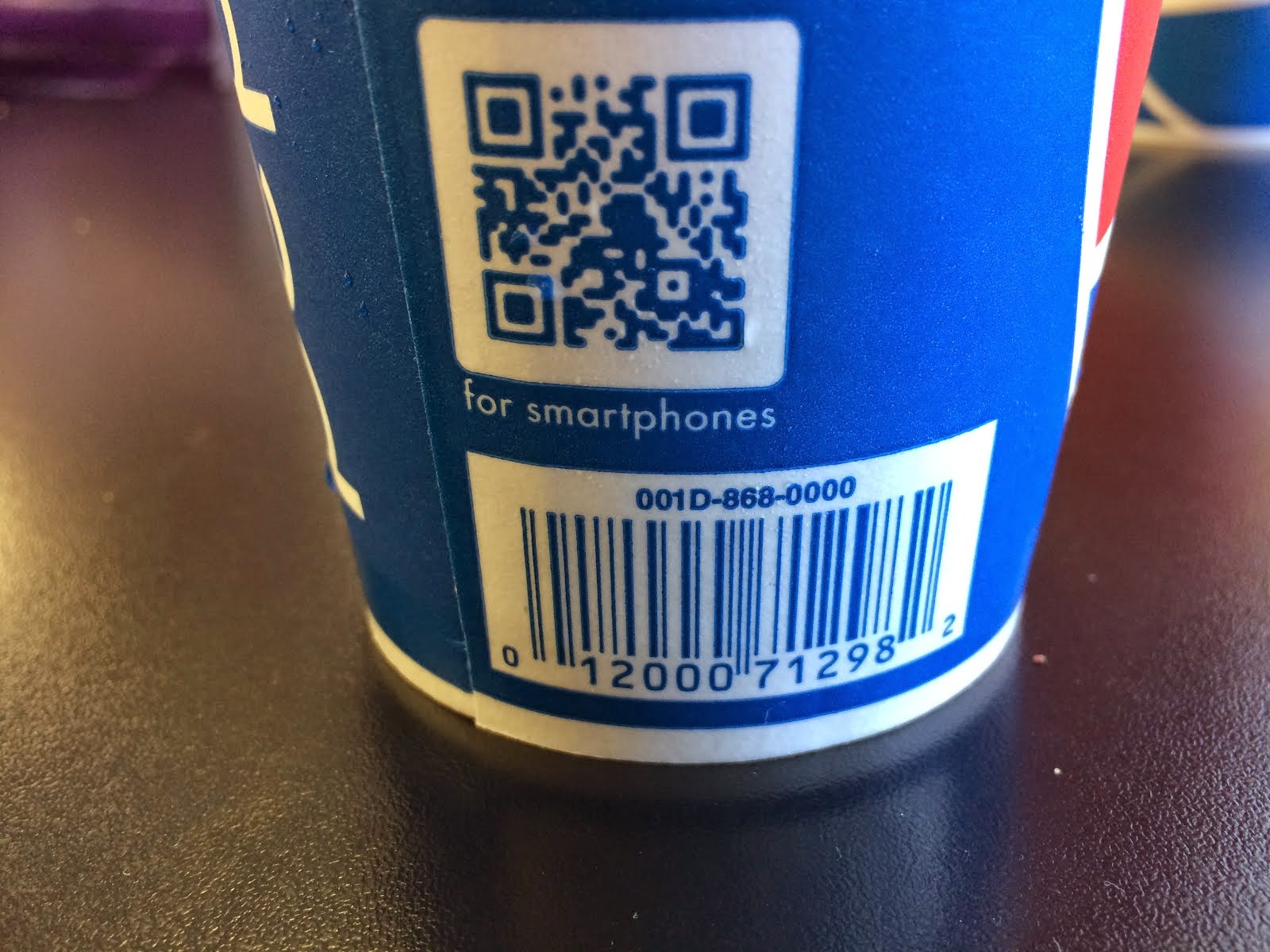
I thought QR codes were dead, but I have seen them show up in unusual places lately.  Are these businesses just behind the times, or are have they created a new use for the Quick Response data?

Example 1:
It's never good when you have to label what a QR code is or point out that it is "for smartphones".  If someone doesn't know the difference between a QR code and a UPC code, I doubt they are going to use it.


Example 2:
Who is supposed to use this code?  I was not the one who took a picture while in traffic, but what good does it do on a loaner car?


Just because there is technology out there doesn't mean that you have to use it.  Consider your vehicle as well as your messaging when you decide how to connect with your customers.  

-- beth triplett
leadershipdots.blogspot.com
@leadershipdots
leadershipdots@gmail.com


Saturday, April 4, 2015

#1037 headlines

There has been much in the news lately about airplane crashes -- 24 of them that involved more than 14 passengers since last year began.  Planes have disappeared, been shot down and seemingly were intentionally flown into a mountainside.  It is enough to give you pause...

...and yet, despite the high profile and 1,187* deaths, 2014 had the lowest accident rate in history -- an average of one accident for every 4.4 million flights!**

Some members of the public may be afraid to fly given the visibility of the crashes in the media.  It seems like planes are having accidents "all the time."  But if they look more deeply into the data, they will see that air travel still is one of the safest methods of transport.

There are probably statistics in your field that garner the sensational headlines.  Look beyond the initial numbers and put them into context before you ground yourself by making decisions based upon facts in isolation.  

-- beth triplett
leadershipdots.blogspot.com
@leadershipdots
leadershipdots@gmail.com

Source:  
*Aviation Safety Network
** The International Air Transport Association
As quoted on CNN 3/25/15

Friday, April 3, 2015

#1036 tinkering

I am not really a sports junkie, but one of my favorite movies is Moneyball.  Based upon the Michael Lewis book, it recounts the journey of the Oakland A's in their quest to think differently and use a new lens for recruiting major league baseball players.  

The A's did not willingly embark on an innovative path until they were faced with this reality:  in October, 2001, the New York Yankees had a payroll of $114,457,768.  The Oakland A's had a payroll of $39,722,689.

General Manager Billy Beane knew his team could not effectively compete in the same way utilizing only one-third of the salary vs. his competitors.  So he had to revolutionize how he approached the process, the staffing and almost every aspect of the game that was in his control.

With the world changing as fast as it is, other leaders would do well to emulate Billy Beane.  What worked yesterday will no longer work tomorrow.  We need to be open to considering (or inventing) new models to accommodate our reality.  

Just tinkering is as out of date as TinkerToys.

-- beth triplett
leadershipdots.blogspot.com
@leadershipdots
leadershipdots@gmail.com


Thursday, April 2, 2015

#1035 pause

My perfume of choice is Clinque's Happy Heart.  As I spray it on in the morning, I know I'll "be happy" for at least one point in the day.

We focus a lot on the positive spectrum of emotions, but sometimes I think it is healthy to be sad when the situation warrants.  We don't need to wear the equivalent of "Sad Heart" every day, but brushing sorrow aside isn't always the best either. 


It reminds me of the fermata, a musical symbol that tells the composer to hold the pause for as long as he or she would like.  "A fermata can occur at the end of a piece or movement, or it can occur in the middle of a piece, and be followed by either a brief rest or more notes."*


Take care to add a fermata into your life when you need a hold in your daily routine.

If someone close to you has left your organization or if one of your favorite colleagues is taking a new job, it may be a Fermata Day.  Pause and reflect on all the memories you will cherish.  Pause and let your heart heal.  Pause and have gratitude for what remains.

Life's music isn't filled with just high notes.  Acknowledge the pauses that allow us to transition to the next movement and reclaim the joy.

-- beth triplett
leadershipdots.blogspot.com
@leadershipdots
leadershipdots@gmail.com

*Quote from Wikipedia "Fermata"
Original source of the fermata idea from Seth Godin's blog entry "The fermata" 11/20/12


Wednesday, April 1, 2015

#1034 first

I'm teaching a class on effective teams this semester and we have been using Patrick Lencioni's The Five Dysfunctions of a Team as one of our texts.

We have discussed how several of his concepts are counter-intuitive and push up against some of the things we normally think of in the execution of team leadership.  One of the true, but perplexing, realities is the concept of the First Team.  

Leaders report "up" in addition to leading their own team.  The First Team means that people prioritize the senior team they are a member of over the team that they lead or manage.  We spend so much time concentrating on leading a team, developing "our people" and creating an effective culture that it can be hard when our membership on another team needs to take priority over that leadership role.  

But it does.

The senator needs to prioritize the good of the country over the good of her state.  The school board member must put the needs of the district over the desires of "her" school.  The manager must prioritize the needs of the senior management group over his department.  The coach must consider the athletic department or league before his individual sport.  The parent must concentrate on their marriage over the desires of their children.

Prioritizing the First Team over the team you lead can be a challenging thing to do.  But in the end, it is what is needed from leaders. 

The whole is the First Team.  Give it the institutional collaboration and cooperation it warrants to achieve your mission and overarching goals.

-- beth triplett
leadershipdots.blogspot.com
@leadershipdots
leadershipdots@gmail.com

The Five Dysfunctions of a Team: A Leadership Fable by Patrick Lencioni, 2002, p. 135+
and Overcoming the Five Dysfunctions of a Team: A Field Guide by Patrick Lencioni, 2005, p. 77-78

Tuesday, March 31, 2015

#1033 simple

I recently had two occasions where I became frustrated because something didn't work. 

My Fitbit battery was low so I replaced it, only to have the entire device go black.  I thought I had a bad battery, so I made another trip to Target and purchased a new one.  The same thing happened -- zip on my Zip.  I had my mechanically-inclined friend try to fix it.  Nothing.  

So I emailed Fitbit customer support.  Two days later I received instructions on how to make sure the "silver battery tab is flush with the outline in the tracker housing."  I moved the piece of metal that is about the size of an earring post a distance about the width of an eyelash.  It worked beautifully.  

Then I wasted another 15 minutes of my life trying to get my phone to sync with the wireless speaker.  I tried every button and gizmo to get music to play, but silence.  Until I realized that the volume on my phone was on zero.  Oops.  One swipe of the finger and The Boss was in my office.

Sometimes it is the simple things that trip us up.  We tend to look for complicated solutions to problems or overlook the obvious.  The next time you are faced with a problem, be it mechanical or cultural, take a moment to try the easy solution first.  It may just do the trick!

-- beth triplett
leadershipdots.blogspot.com
@leadershipdots
leadershipdots@gmail.com